
Tank containers are eco-friendly and sustainable – ITCO
The International Tank Container Organisation (ITCO) – the trade body representing companies actively engaged in tank container operation, leasing, manufacturing and support services – has taken note of recent promotion and publicity relating to its flexibag services.
On behalf of ITCO’s Members, ITCO president Reg Lee corrected a number of misconceptions which could potentially arise from this publicity.
Flexibags are neither eco-friendly nor sustainable. A flexibag is made of plastic films consisting of polyethylene and a polypropylene sleeve, it weighs more than 40kg and will probably end up in a landfill rubbish site. Each flexibag is equivalent to over 7,500 single-use shopping bags.
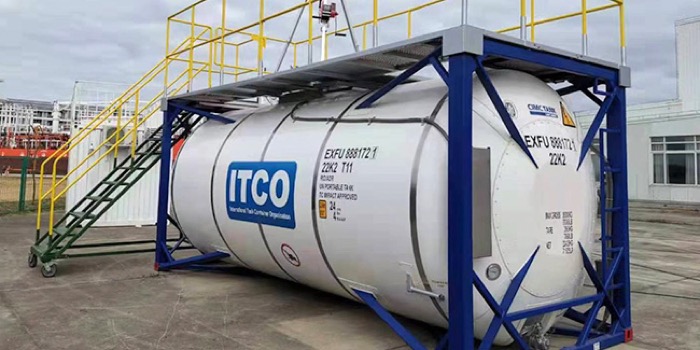
A tank container, on the other hand, can transport cargo multiple times per year – and over a life cycle that can easily surpass a 20-year service life. At the end of its life, approximately 90 percent of the tank is recyclable through long-standing metal recovery services.
Flexibags are not fully recyclable.
After use, the flexibag has limited possibilities for recycling because it is made of thin 0.25mm films of polyethylene. Rigid plastics items can be made into new plastics using well established processes, whereas soft plastics films are not easily recyclable and the process is costly. The majority of soft plastic films will end up in landfill, most probably in a cargo contaminated state, which further endangers the environment.
The flexibag promotion statement that there is “no need to clean the container after use, as with ISOtanks” is misleading and incorrect.
While a flexibag which has carried wine might possibly be safe for shredding and reprocessing in an empty-dirty state, any flexibag which had been carrying chemical or petroleum products must be thoroughly drained and cleaned for safety of handling, prior to being sent to landfill or incineration. Conversely, the controlled and monitored cleaning of tank containers allows them to safely carry high quality goods repeatedly.
The statement “less packaging than conventional ISOtanks” is false. Tank containers are themselves the packaging for transport and no additional materials are required. Flexibags, on the other hand, must have liners made of varying materials for the dry box, bulkheads, and potentially heating pads – in addition to the single-use multi-layered flexibag itself.
The full cost of packaging and recycling a flexibag is rarely taken into full consideration by shippers, as it is usually the full responsibility of the consignees or receivers to voluntarily recycle the flexibags or dispose of the dirty flexibags in landfills. Few processes or laws are in effect to trace the flexibags from cradle to grave, and waste is not controlled as it is in tank containers.
The responsibility for the environmental stewardship of the bag is lost along the supply chain, without traceability. The shipper, who purchases and introduces the 40kg of plastic into the world, has no responsibility for what subsequently happens to it upon delivery. This is entirely different to a tank container shipment, where the tank container operator retains responsibility for the environmental stewardship of the tank container – and of its cargo residue and of its cleaning. The operator accepts full responsibility right through the supply chain and welcomes auditing at every stage.
Flexibags present a risk to human life – from a confined space perspective – as destination handlers all over the world need to remove contaminated flexibags from the container and place them in a skip for disposal. Lack of procedures and controls globally could put workers at risk. Tank containers have established and audited safety procedures which minimise and control the risk to workers.
ITCO also emphasised that the carriage of bulk liquid cargoes by road requires special driver training because of the risks associated with the surge movement of liquids inside the containers. Specialist tank container trucking companies carry out extensive training to educate their drivers about the danger of liquid surge inside the tank container and the effect this has on the stability of the vehicle. There is generally no such training among conventional dry-box trucking companies used to transport flexibags, making the transportation potentially unsafe.
In this regard, flexibags are unsatisfactory in terms of road safety both for drivers of the vehicle and the public around them, due to the risk of liquid surges that effect braking and stability. This might lead to rollovers for drivers unused to liquid cargoes.
ITCO president Reg Lee confirmed that a tank container remains the safest and most environmentally acceptable method of containerised bulk liquid transport. Every 40 kg of plastic flexibag that is manufactured represents a needless addition to the burden of plastics in the global environment, because the same liquid cargo could be repeatedly carried instead by tank container.
For more information visit www.international-tank-container.org
27th June 2022