
Aptamus Carbon Solutions and LBC Tank Terminals announce joint development agreement for CO2 marine terminals, completing CO2 supply chain from Port Tampa Bay
Aptamus Carbon Solutions LLC, a subsidiary of Overseas Shipholding Group, Inc. and a key player in energy transportation, has announced a significant development in its carbon capture and storage strategy through an agreement for the design and engineering of a CO₂ discharge terminal at LBC Tank Terminals’ facility in Baton Rouge, Louisiana. LBC, a global operator of bulk liquid storage terminals, contributes essential infrastructure and operational expertise to support the scaling of CO₂ transport and storage solutions.
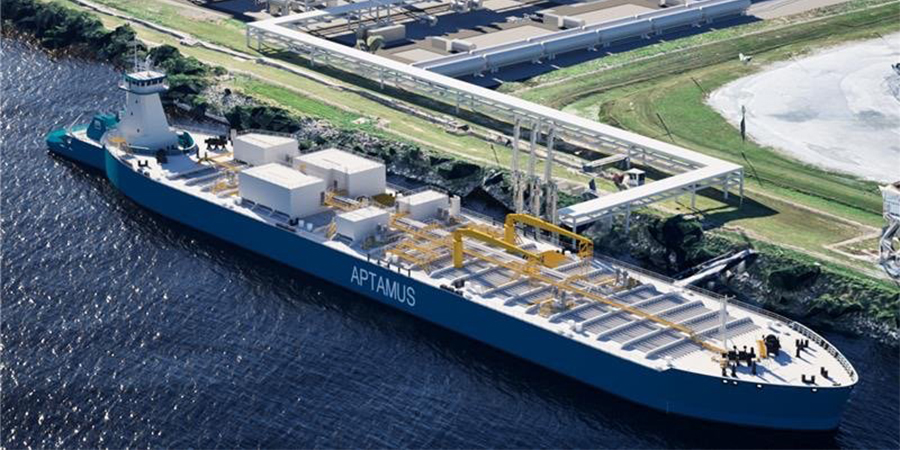
This agreement complements a potential partnership with Port Tampa Bay to develop a CO₂ loading terminal, forming a complete and integrated supply chain for the collection, processing, marine transportation and permanent sequestration of captured CO₂ from Florida-based emitters. The CO₂ will ultimately be securely stored in the northern Gulf of Mexico region across Texas and Louisiana—an area known to have the largest confirmed capacity in the United States for underground CO₂ storage.
Supporting Carbon Capture in One of the Nation’s Highest-Emitting States
“This agreement with LBC provides further certainty and confidence in our company’s business case,” said Jeffrey Ross Williams, president of Aptamus. “With partners such as LBC and Port Tampa Bay, Aptamus is now better positioned to create an efficient, cost-effective and seamless supply chain for the temporary storage, processing and ocean shipment of captured CO₂ from one of the nation’s highest emitting states.”
Williams added that the project is expected to accelerate the uptake of carbon capture among Florida’s electricity generators, delivering significant health, economic and environmental benefits. “The reputations of our partners can be trusted to deliver the most effective solution for the permanent disposal of Florida’s CO₂ emissions,” he said.
Strategic Partnerships for Decarbonisation Infrastructure
Paul Anderson, president and CEO of Port Tampa Bay, welcomed the collaboration, stating: “Our partnership with Aptamus and OSG has the potential to create new jobs and deliver wide-reaching environmental and health benefits. This proposed partnership highlights the diversification of our maritime economy and reinforces our commitment to a sustainable and resilient future.”
Jeff Dewar, senior vice president Americas at LBC Tank Terminals, said: “LBC is delighted to partner with OSG and Port Tampa Bay on this critical decarbonisation infrastructure initiative. As an international operator with a proven record in liquid bulk logistics, LBC is uniquely equipped to help deliver scalable CO₂ infrastructure. This collaboration reflects our ongoing commitment to enabling low-carbon solutions through strategic investment and operational excellence.”
Backed by Federal Support
The proposed CO₂ supply chain is set to be supported by two grants from the US Department of Energy. One grant has been awarded to OSG for the design and engineering of a CO₂ collection, liquefaction and loading terminal at Port Tampa Bay, which is intended to serve as Florida’s primary carbon capture hub. The greater Tampa region alone emits more than 30 million tonnes of CO₂ annually, primarily from electricity generation.
A second grant is expected to fund a FEED-level study for the broader transport and storage network, known as the Carbon Ocean and Storage Transport 20 project. This study will cover the engineering of a 20,000-tonne tank vessel and its cargo system, the potential Tampa Bay loading terminal, and the Baton Rouge discharge terminal.
Located adjacent to an existing CO₂ pipeline network, the Baton Rouge terminal will enable direct delivery to Class VI injection wells, supporting permanent and safe geological storage.
Through this initiative, Aptamus, OSG, LBC and Port Tampa Bay are building a first-of-its-kind marine-based CO₂ supply chain—a scalable and sustainable model that supports climate goals and regional decarbonisation while creating long-term economic opportunities.
For more information visit www.lbctt.com
15 May 2025